
01.
About Me
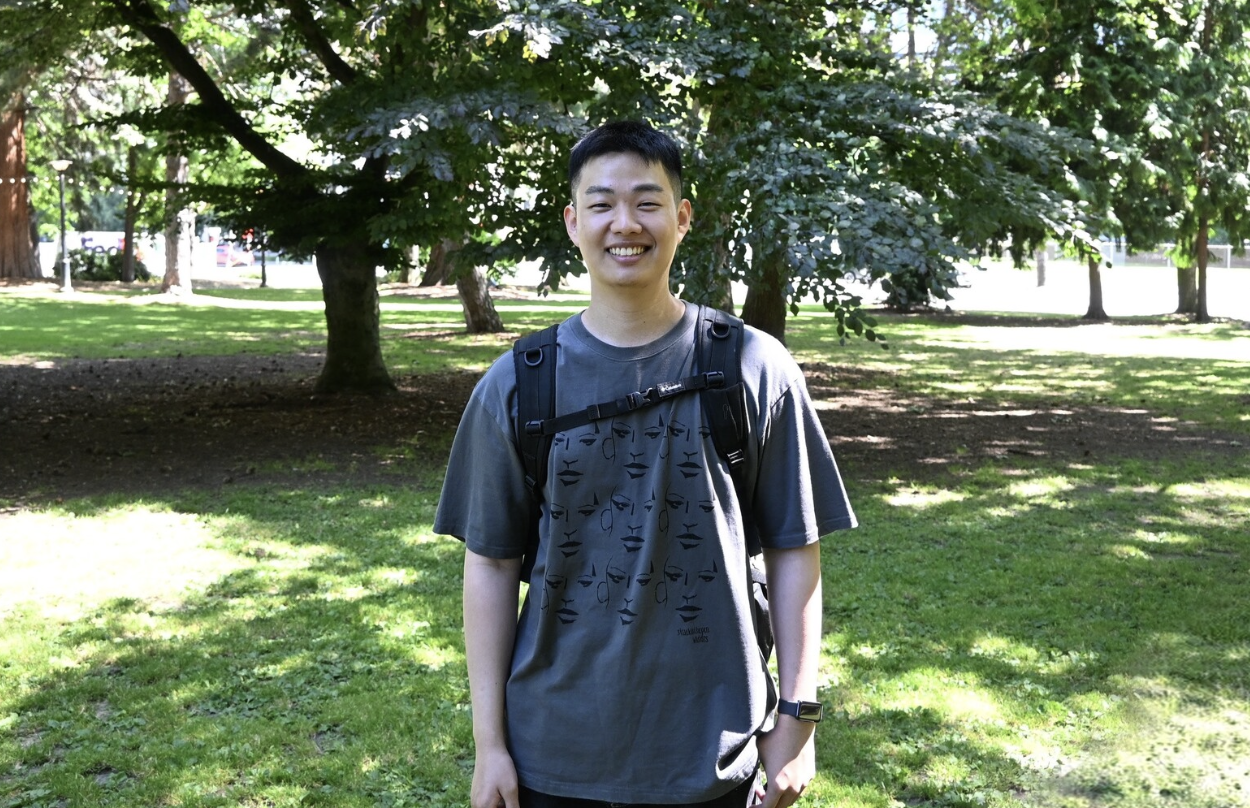
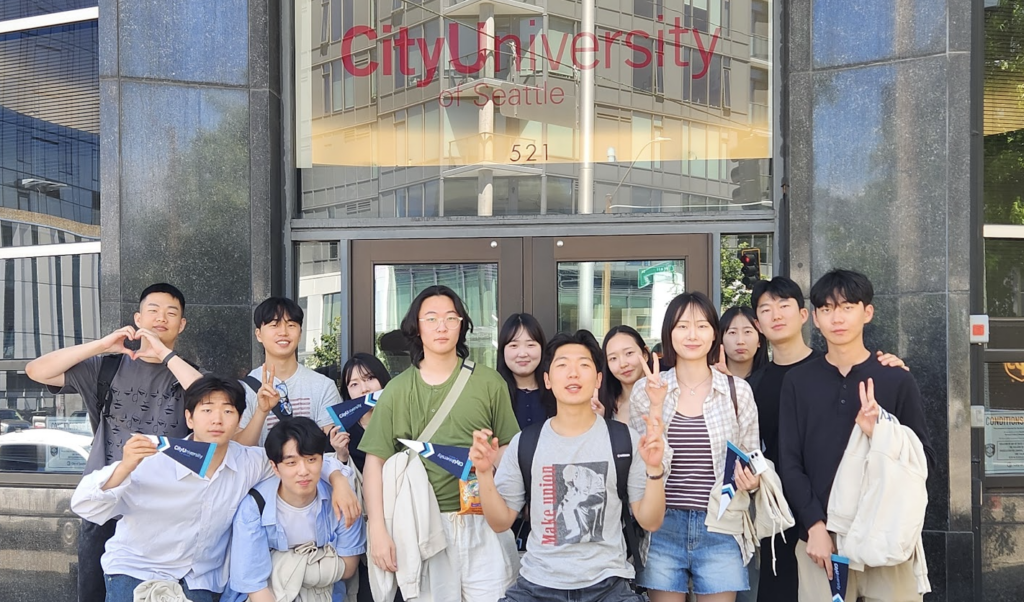
Hi. I'm Julian Park
a senior, majoring in
Air Traffic Control & Logistics
at Kyungwoon University.
02.
What Seattle bring
🔥 Turning Point
I initially struggled to define my exact role in the industry. Knowing that bridging aviation with technology required software literacy, I began self-studying programming languages like Java. However, my true turning point came during the AI Agent Summer Camp at City University of Seattle.
During the program’s Invited Talks, I met mentors whose journeys transformed my perspective.
Connecting Dots
Dr. TaeJin Kim shared his unique path—spanning Aviation Maintenance, a Master’s in Software, and a Ph.D. in Business. I had often worried that crossing multiple fields might leave me a “jack of all trades, master of none.” His story showed me the exact opposite: In this era, fusing deep domain knowledge with software and AI is the ultimate strength.
Fusion of Domain & AI
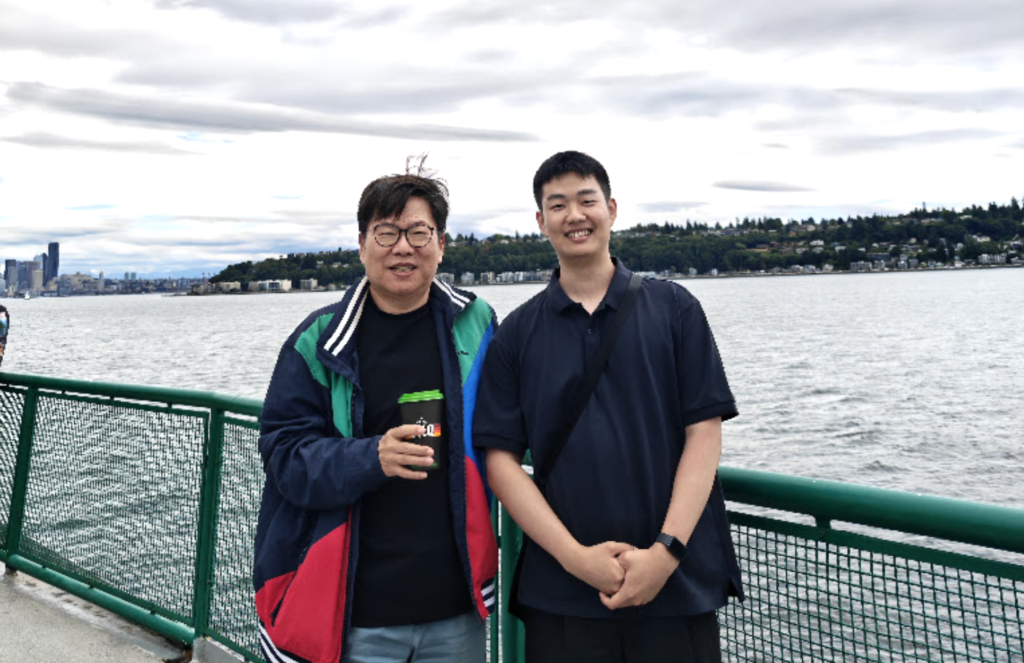
Conversations with Dr. Sam Chung—including a memorable discussion on the ferry from Bremerton to Seattle—and insights from Dr. Kyle Min reinforced this truth. They emphasized that AI is only as powerful as the domain expertise guiding it. To truly leverage AI,
I must first master the core domain.
👀 A Clear Vision
Surrounded by exceptional mentors in Seattle, the foggy contours of my career vision became crystal clear.
I decided to combine my foundation in Air Traffic Control with software engineering and AI Models to architect next-generation airspace solutions.
My ultimate goal is to pioneer intelligent systems across air traffic management, airspace design, surveillance, and flight procedures—drastically enhancing both safety and efficiency in the skies of tomorrow.
02.
Play a Mini-Game
MISSION SUCCESS!
MISSION FAILED!
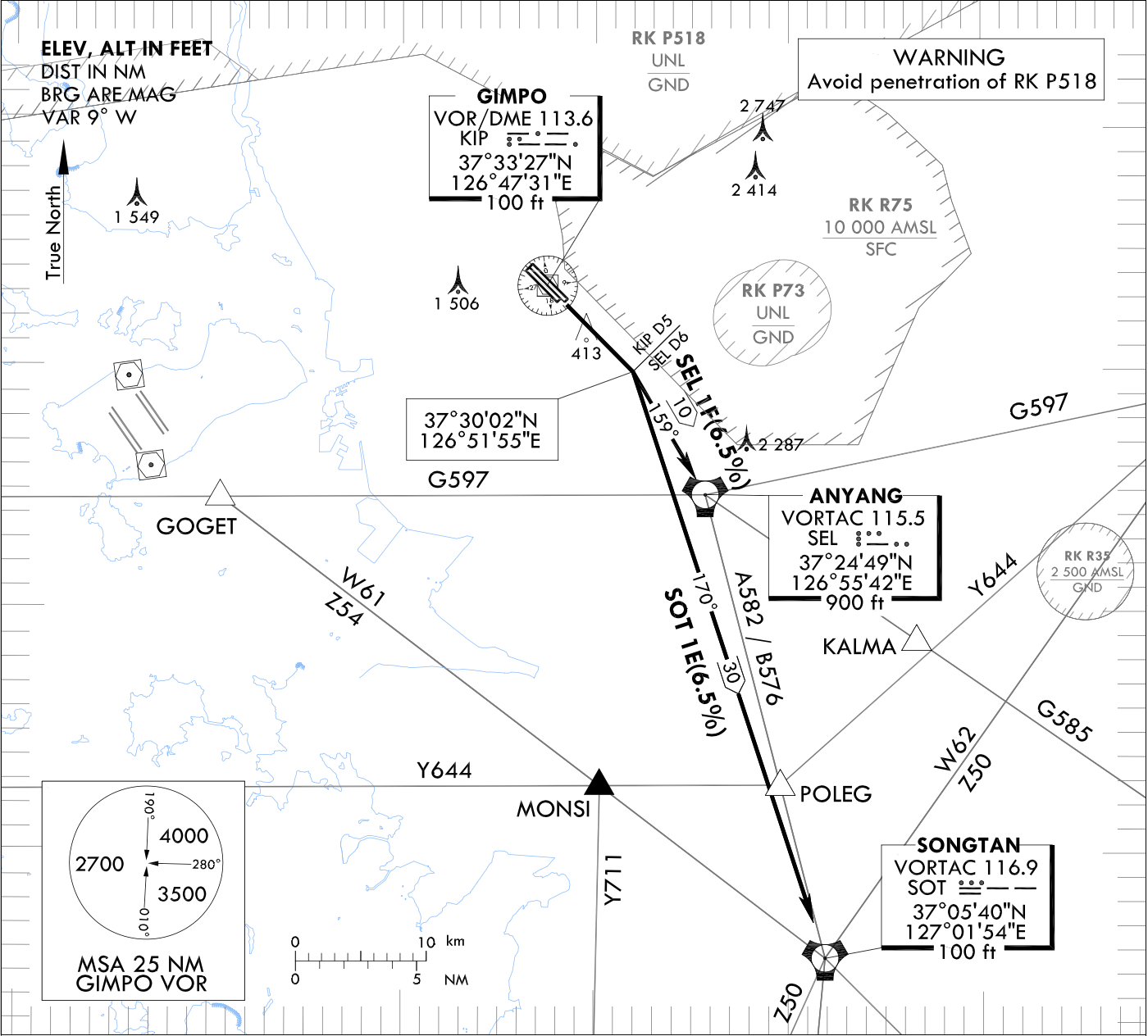
Designing a flight path is just like this:
It requires maintaining proper vertical limits, avoiding terrain and obstacles, and keeping safe separation from other aircraft.
The stricter the separation limits, the fewer aircraft can fly at the same time.
That is why VISES provides an innovative vision to maximize airspace efficiency while ensuring seamless safety.
03.
So, What's It all about?
• Key Definitions
-
ATC (Air Traffic Control)
The police and navigation system of the sky. An essential service that maintains safe separation between aircraft while ensuring an orderly and efficient flow of air traffic. -
UAM (Urban Air Mobility)
A next-generation aerial transport ecosystem that uses electric Vertical Takeoff and Landing (eVTOL) aircraft to carry people and cargo through low-altitude city skies, bypassing urban ground traffic. -
ADS-B (Automatic Dependent Surveillance-Broadcast)
The digital beacon of the sky. A satellite-based surveillance technology that enables aircraft to automatically broadcast their precise real-time position, altitude, and velocity to ground stations and surrounding traffic.
• Key Concepts

Traditional Air Navigation
: A Well-Paved Sky Highway
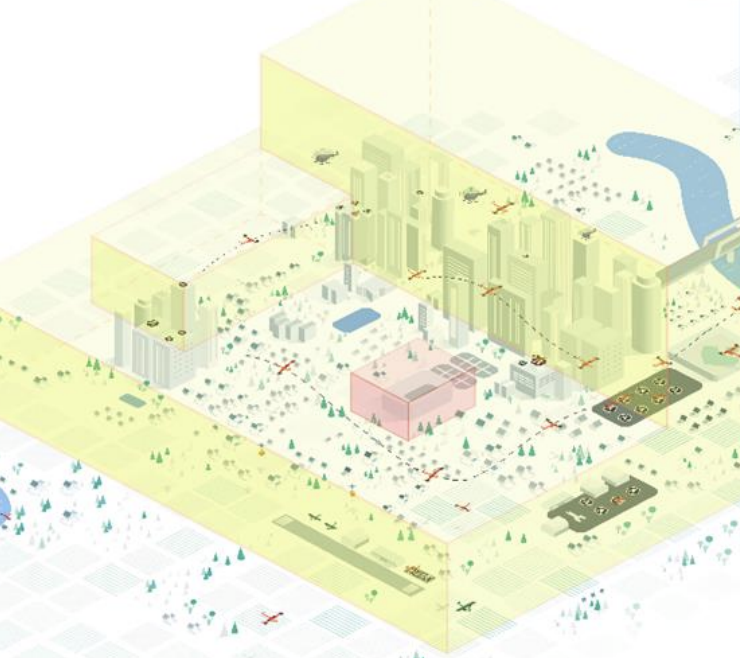
Think of traditional airplane flights like long-distance train networks or multi-lane highways. Large passenger jets fly on fixed routes, stay at high altitudes, and are managed by air traffic controllers every second. Everything is planned, predictable, and strictly structured.
The Challenge of UAM
: Skies Without Traffic Lights
Now imagine hundreds of small flying taxis (eVTOLs) zipping through a crowded city, flying between skyscrapers at low altitudes. Unlike high-altitude jets, relying solely on rigid, fixed corridors makes it difficult to accommodate high-density traffic in limited urban airspace. Without dynamic rules and smart routing, flying in the city can easily lead to severe congestion and unsafe operations.
"VISES Vision"
: Universal Sky Infrastructure
Just as traffic lights, lanes, and GPS are the same across the globe, low-altitude UAM airspace needs a universal, global standard.
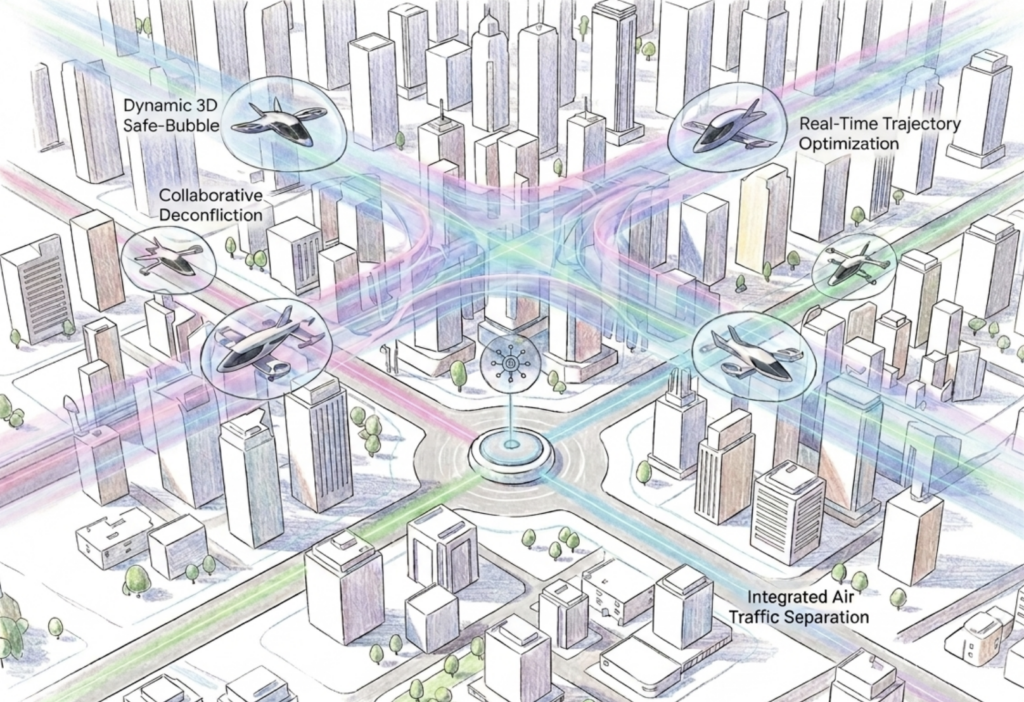
By combining Real-World Air Traffic Control Rules with AI & Software Engineering, VISES creates intelligent, 3D digital skyways. We ensure every flying taxi moves safely, efficiently, and automatically—without ever getting in each other’s way.
04.
Core Innovations
Combining real-world Air Traffic Control (ATC) expertise with advanced AI and software engineering to engineer the next generation of 3D airspace orchestration.
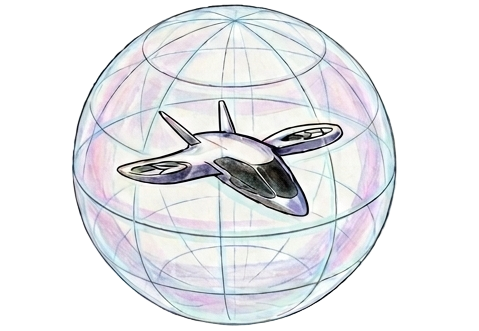
1. Dynamic 3D Safe-Bubble
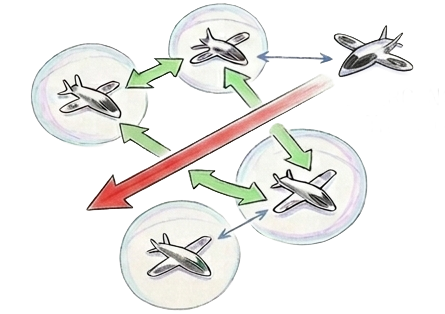
Leveraging onboard vehicle sensors and ground-based radar systems, every eVTOL is enclosed in an adaptive 3D safety bubble. The AI continuously adjusts this bubble in real time, ensuring maximum airspace capacity without ever risking collision.
2. Real-Time Trajectory Optimization
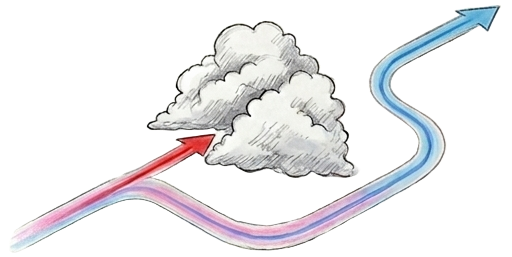
When unexpected bad weather or vehicle malfunctions occur, our AI instantly recalculates an energy-efficient, optimal RNAV route in real time.
3. Collaborative Deconfliction
Vehicles communicate with each other in real time. Nearby eVTOLs cooperatively yield to grant emergency or landing aircraft the shortest and fastest path.
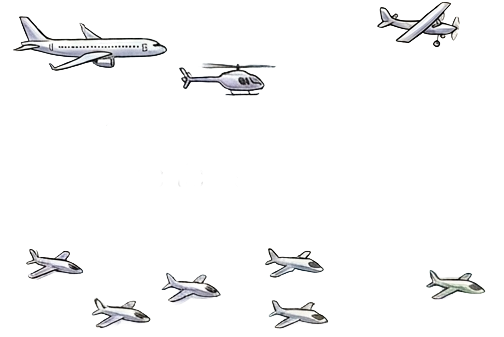
4. Integrated Air Traffic Separation
Beyond UAM-to-UAM deconfliction, the system ingests real-time traffic data from traditional aircraft (manned aviation) to maintain seamless, safe separation across all flying vehicles in controlled airspace.